No, they are not. Synthetic, imitation, fake, cultured, manufactured, created are sometimes used interchangeably by people when discussing jewelry, but they DON’T mean the same thing in the gemstone world.
As both a jeweler and a gemologist I often speak to people about gemstones. I may be helping them create a piece of jewelry, identify inherited gems, repurpose inherited jewelry, or just buy a special gem to keep. In these situations, I deal with all of these types, and each is a distinct and different category. In science, precise terminology is critical across all fields. Although people mostly consider the artistic and commercial aspects of gemstones, it is also important to be precise in gemology. It is especially critical, as a consumer, to understand the meaning of these terms when you’re trying to make a purchase! Otherwise, you could be unpleasantly surprised.
Natural or Mined
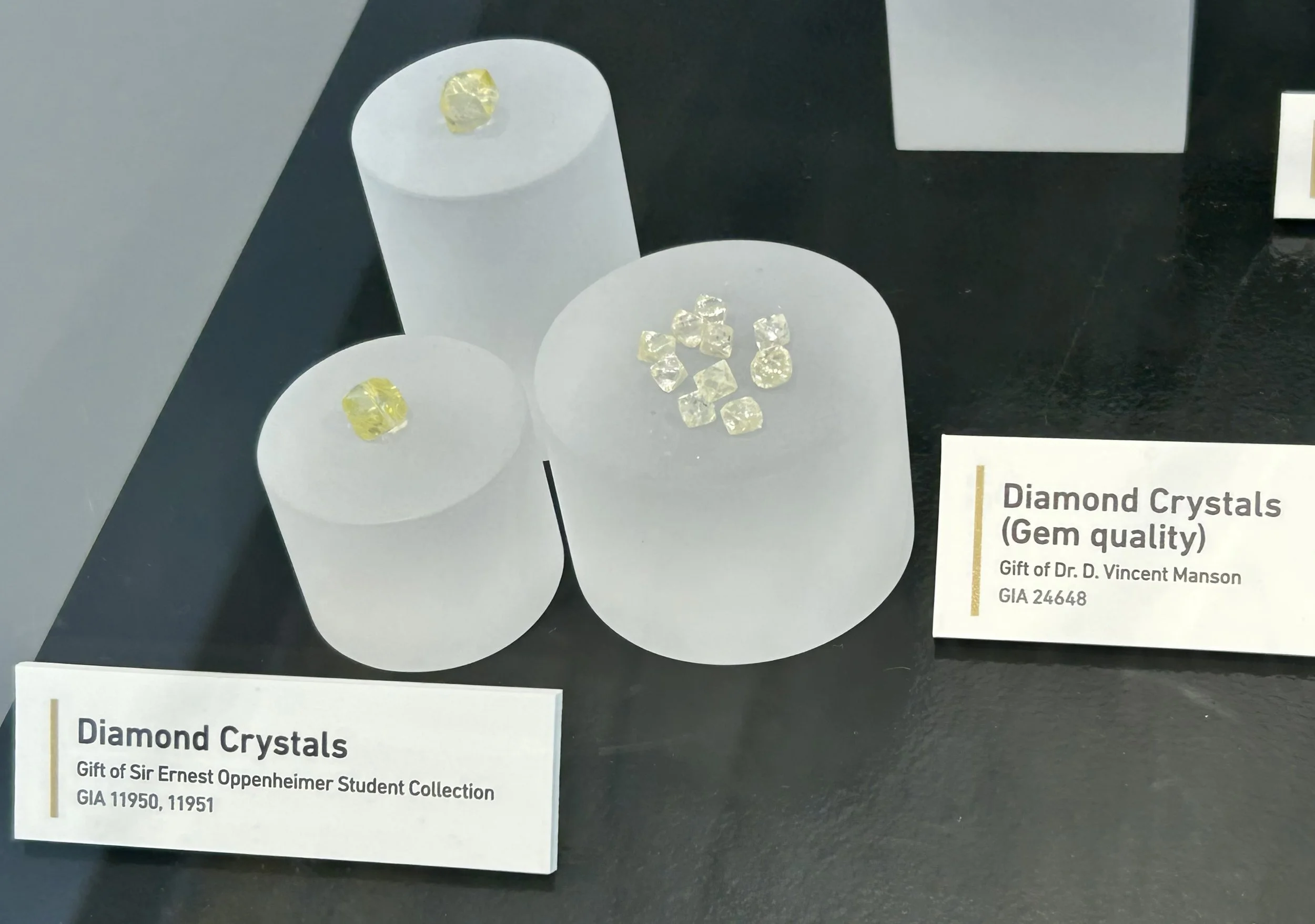
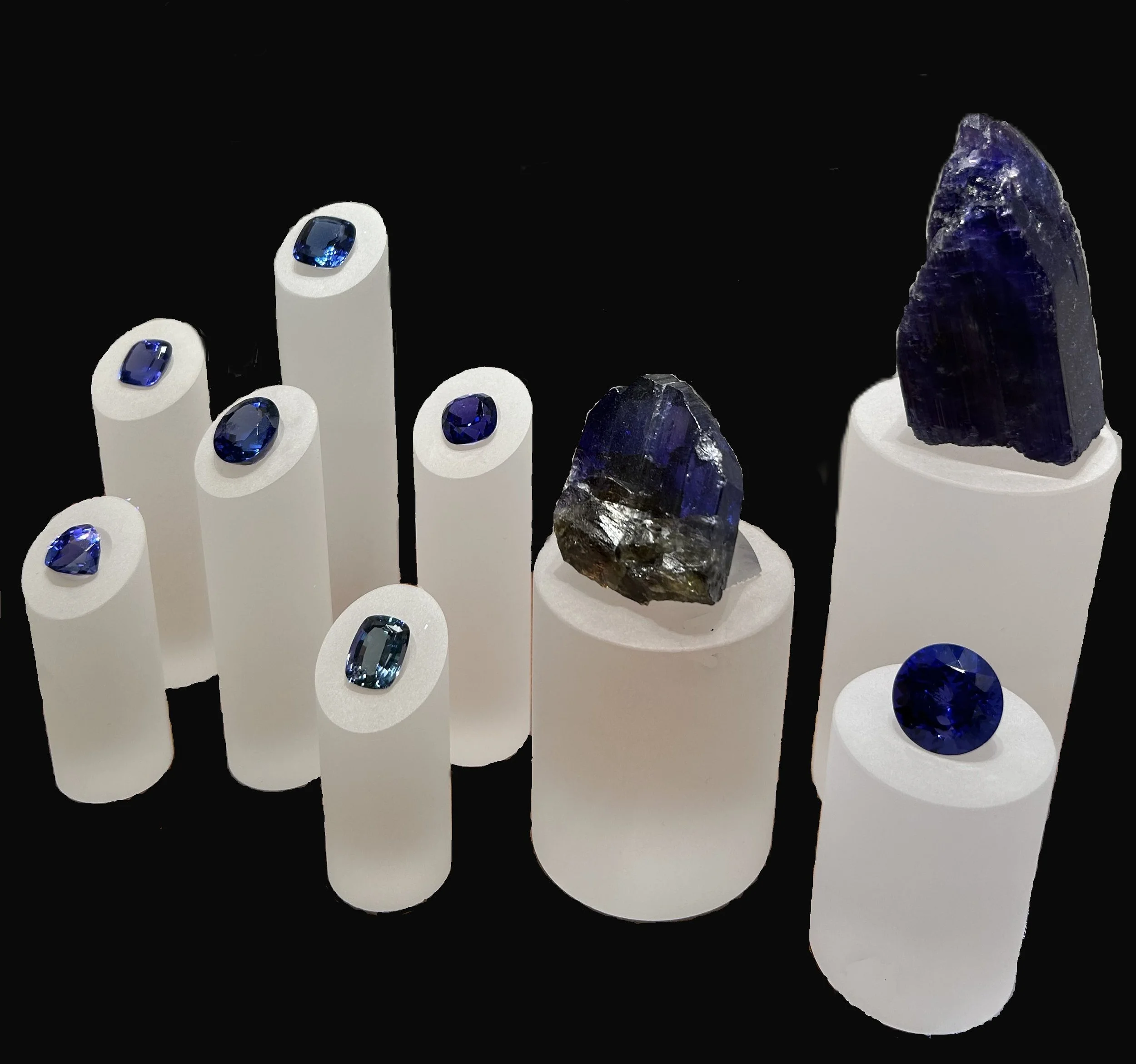
A “natural” or “mined” stone is one that grew in or on the Earth via a variety of processes. It was then mined, also by many different mechanisms, and came to market from a miner, dealer, cutter and/or artisan. These gemstones can be found all over the globe, but the best quality ones are rare and often command higher prices. There are also middle and low-quality ones that are more common and more affordable. The range of price points for every natural gemstone is determined by scarcity, market demand, color, visual quality, and size.


Synthetic or Lab-Created
A “synthetic” or “lab-created” stone is one that was grown in a laboratory or factory using the ingredients and conditions necessary for the specific crystal to grow. They have the same chemical composition and crystal structure as a “natural” stone, and are, in fact, that gemstone material. It takes much less time to grow than in nature (days or weeks vs millions of years). There are no traditional mining operations associated with them. There are high and middle quality examples, but poor-quality ones don’t usually make it to market.


If you were to see one of these before they were cut and/or put into jewelry, you could see right away that they are not “natural”. A natural sapphire or ruby looks distinctly different from the synthetic boule that is produced in a factory. Similarly, lab-created diamonds, just out of the machine, look different than natural ones. Synthetic stones reach the market in much the same way as mined stones do. They are typically less expensive than their mined counterparts, but they aren’t necessarily “cheap”. They are made by man, which is the defining characteristic. It is important to note that synthetic or lab-created gemstones are not a recent addition to the jewelry industry. The first synthetic gemstones were rubies, produced in 1902. So, do not assume that just because it’s old that it must be natural.


Historically, synthetic gemstones were relatively easy to spot by someone with training, like a gemologist. For colored stones, like emeralds and sapphires, three main methods are used: flux; flame fusion; and hydrothermal. They each have their own signature, which is visible under magnification. Examples of these can be seen in the gallery above. Opal, as an amorphous gemstone rather than a crystalline one, and has a different method of production involving the stacking of tiny spheres of silica. This too produces it’s own telltale signature.
Synthetic diamonds are produced entirely differently. The two methods used for those are HPHT (High Pressure High Temperature) and CVD (Carbon Vapor Deposition). You can learn more about that HERE. Both these methods have a signature as well, but the quality of synthetic diamonds has gotten so good that only gemological labs will be able to confidently identify them. Some modern handheld diamond testers can identify diamonds that are considered “suspicious”.
Originally, many of the techniques developed to create these synthetic crystals were intended for industrial use. Synthetic corundum (sapphire and ruby) is used in a variety of fields. It’s use spans watches (faces and bearings); optical windows, lenses, and prisms for scientific instruments; high powered and medical laser systems, and abrasives. Synthetic quartz (citrine, amethyst, rock crystal) is used in watches, computers, smartphones, semiconductor fabrication, laser components and optical lenses. Synthetic alexandrite is used to manufacture solid state lasers for medical, scientific, and military purposes. Today however, there are companies that grow these crystals purely for the jewelry industry.
Synthetic gemstones are a viable alternative to natural gemstones for a variety of reasons. Sometimes, it’s the right choice for one’s budget. They can also be used to create “travel jewelry” - a less expensive duplicate of a piece that you don’t want to loose. They can also be used when finding the natural version is too difficult for example, a large alexandrite. During the Art Deco Period synthetic rubies were used when the jewelry required multiple exactly matched stones (finding matched stones can typically take jewelers many years). Or it can be an artistic choice (see example picture below of Halo Opal Earrings). No matter what the reason, synthetic stones are an acceptable alternative as long as they are never sold to a consumer as a natural stone.


Cultured
The term “cultured” is reserved for pearls. The pearls are real, they are created in bivalve mollusk just like natural pearls, but the organism is induced to create it by human intervention. Natural pearls are very rare, so the vast majority of pearls today are cultured. The first patent for producing of round cultured pearls was given in Japan to Tatsuhei Mise in 1907. Round cultured pearls first appeared in the market from Kokichi Mikimoto in 1921.

Kokichi Mikimoto, 1950, seeding an oyster to create a cultured pearl.
Imitation or Fake
“Imitation” or “fake” gemstones are materials used to look like a particular gem but is not that gem. This is the important distinction between synthetic and imitation. Synthetic is the correct gem material, made by man, whereas imitation is something other than that specific gem material. Imitations can be made of glass or plastic, or they can be another gemstone (mined or synthetic). For example, antique jewelry may have “diamonds” or “emeralds” that are just glass with a foil back. Or, a faceted synthetic cubic zirconia can be put in place of a diamond. Or, dark peridot can be used in place of an emerald. Or, howlite can be dyed to look like turquoise.
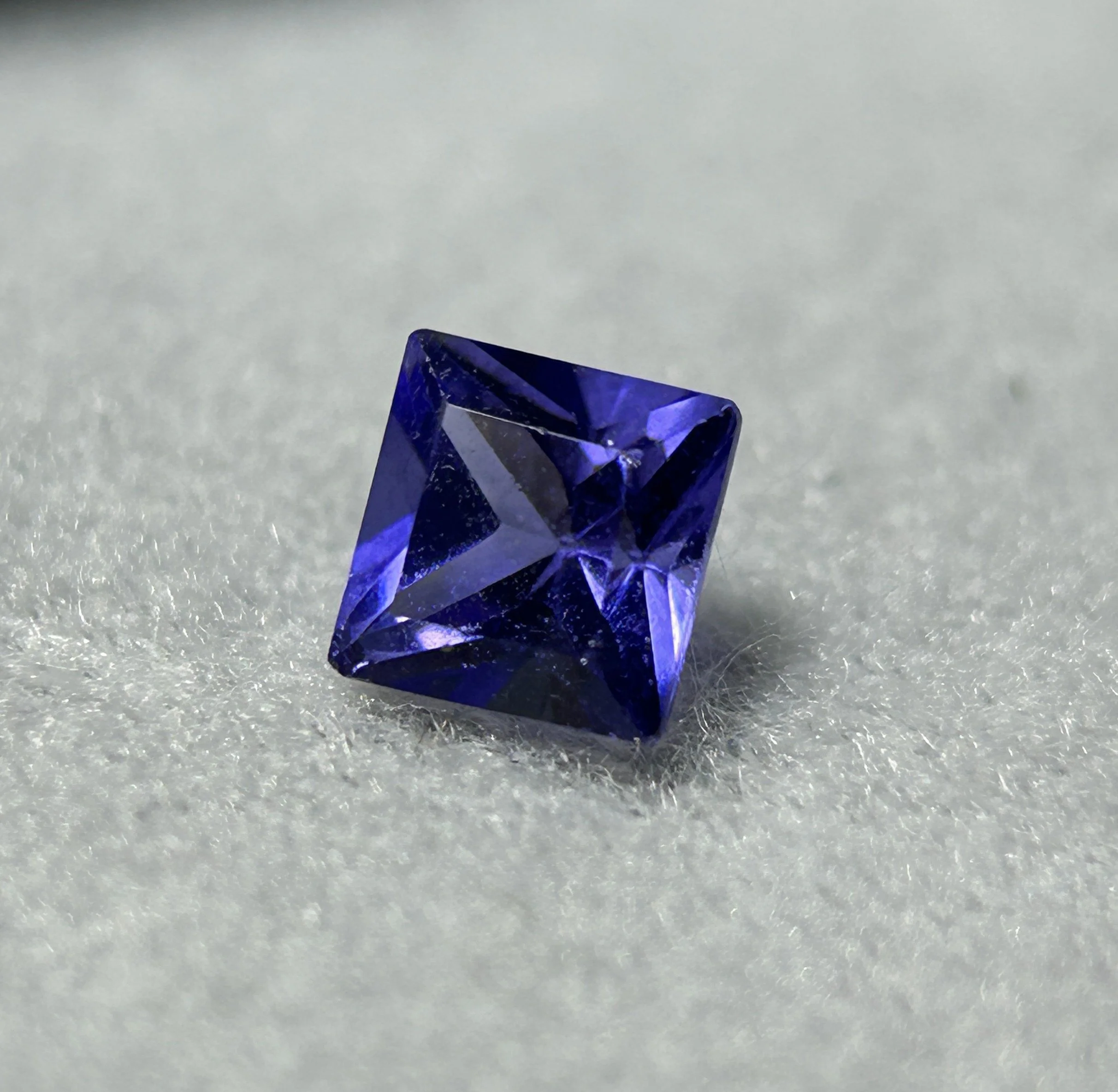


They can even be composites of two to three different materials assembled to look like a specific gemstone. These are intentional acts of deception – the material, whether natural or manmade, is intended to look like, and be mistaken for, another more expensive gemstone. It is perfectly fine to have jewelry with imitation stones in it - costume jewelry typically contains these kinds of stones. It is not ok for someone to sell an imitation stone as the real thing. One thing to note, in the US, many pieces sold as “mother’s rings” or “family jewelry”, with the birthstones of children or family members, contain both imitation stones as well as synthetic gems.
All of these options have a place in the market and you can find every type mentioned here used in pieces of jewelry. In my business, I do sell both mined and synthetic gems, depending on the desire of my clients. I will never sell fakes or imitations. I will always be completely upfront about your purchase and explain the pros and cons of each type. That is what you should look for in a jeweler. Being armed with the correct terminology will help you decide what is right for you, in that moment, and will allow you to find the right jeweler to partner with.
ADDITIONAL NOTE - The World Jewellery Confederation (CIBJO) has recently approved a recommendation that “synthetic” be the sole descriptor used for “a product with the same chemical composition, physical properties, and structure as the naturally occurring counterpart”. In the United States, the naming conventions approved for use are spelled out in the Federal Trade Commission (FTC) guidelines. These guidelines allow the use of “laboratory-grown,” “laboratory-created,” or “[manufacturer name]-created,” immediately proceeding the gemstone.